From Centurions guarding the gates of ancient cities to modern Ring doorbells monitoring our front doors, the drive to protect what matters most has always been a part of human nature. Today, in our digital age, laptops have become some of our most valuable possessions, not just for their cost, but for the treasure trove of personal and business data they hold. And yet, the statistics are sobering: one in ten laptops will be stolen, according to FBI crime reports, and over 90% of those devices are never recovered. A single lost laptop can unleash chaos: sensitive files, business-critical documents, and even personal data can fall into the wrong hands in an instant.
So, how can businesses safeguard their devices and the valuable data stored within them? The answer lies in laptop tracking software. This essential tool doesn't just help locate stolen devices; it also fortifies your company's data security by preventing breaches, limiting identity theft, and enabling quick responses to potential risks.
The market offers a wide array of laptop tracking solutions, each tailored to different needs—whether you're securing a small startup's fleet or managing thousands of devices in a global enterprise. In this guide, we'll help you navigate these options, highlighting the features, benefits, and considerations to keep in mind so you can make an informed choice and protect what matters most to your business.
Why does your company need laptop tracking software
Nowadays, laptops have become indispensable, serving as the backbone of business operations. But here's the harsh reality: they're also prime targets for theft. Did you know that a laptop is stolen every 53 seconds? Even more alarming, 58% of these thefts happen in the workplace, according to recent data. And once a laptop is gone, the chances of getting it back are slim—97% of stolen laptops are never recovered.
But the impact doesn't stop at the stolen device itself. A lost laptop can lead to catastrophic consequences for a business, especially if it holds sensitive data. In fact, the average cost of a data breach in the U.S. reached $9.36 million in 2024, according to recent cybersecurity studies. For smaller businesses, the stakes are even higher—60% of small companies shut down within six months of a cyberattack.
These numbers aren't just statistics; they're a wake-up call. Whether it's a misplaced device or a targeted theft, a single incident can put your entire organization's data security at risk. That's where laptop tracking software comes in. More than just a way to locate a missing device, it's a critical tool for securing sensitive information, managing IT assets, and responding to potential threats before they escalate.
How does this actually work for your business?
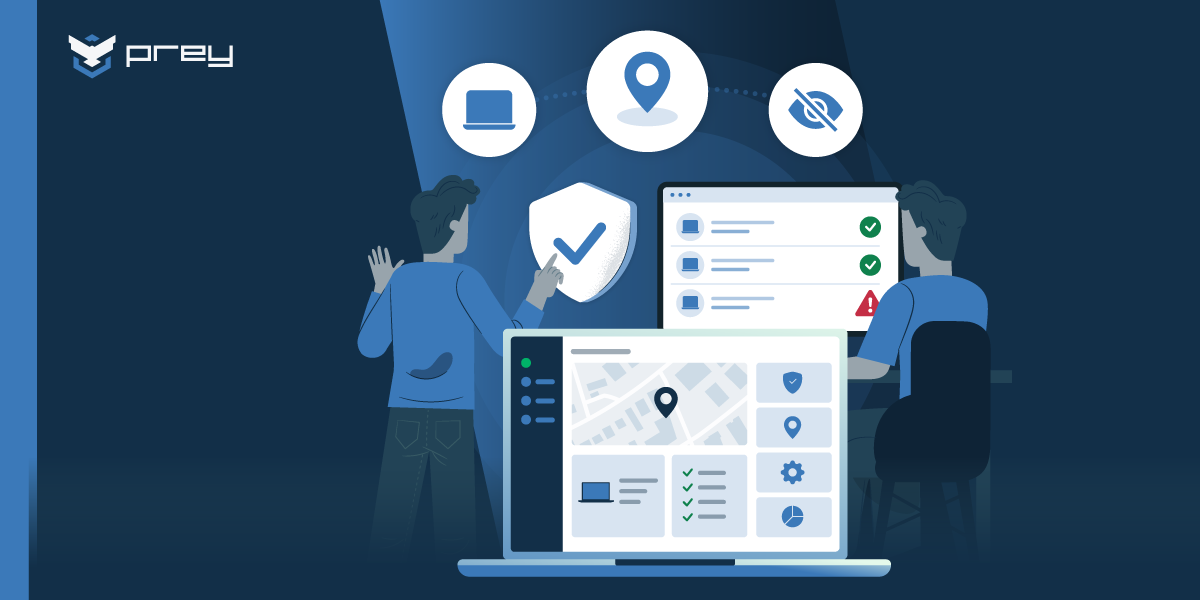
Laptop tracking software is like having a virtual security guard for your devices. It uses a mix of advanced technologies to do far more than simply locate a missing laptop, it's about safeguarding your data, streamlining asset management, and proactively addressing potential threats. Here's how it works:
Key technologies behind laptop tracking software
- GPS tracking: Uses satellite signals for precise, always-on location data when the device is outdoors.
- Wi-Fi Triangulation: Uses nearby Wi-Fi networks to estimate your laptop's position, especially useful in urban environments.
- GeoIP: Tracks your device's location by analyzing its internet connection, adding an extra layer of pinpointing even when GPS isn't available.
These technologies work together to ensure that your IT team can locate stolen laptops and take swift action, whether that's retrieving the device or remotely securing it to prevent data breaches.
What makes tracking software essential for businesses?
- Prevent Data Breaches: Stolen laptops often grant unauthorized access to sensitive files. Remote wiping and locking features ensure that even if the device is gone, your data stays protected.
- Instant alerts: Get notified the moment a device moves to an unexpected location, allowing for faster intervention.
- Faster theft response: Locate a missing laptop the moment it comes online, and trigger a lock or wipe before the data is exposed.
Where tracking fits alongside asset management
Tracking software answers "where is this device, who has it, and can I secure it." That covers most of what an asset register does day to day: hardware and software inventory, assignment records, and location history. Procurement, depreciation, and license renewals sit outside what an agent can read off a laptop, and those belong in a dedicated corporate laptop asset tracking setup. On the security side, tracking earns its place three ways:
- For remote teams: Confirm issued laptops are online and in expected regions, and act fast when one isn't.
- For theft response: Locate, lock, and wipe a missing device, with logs to support a police report.
- For preventing fraud: Counter false "lost" claims with timestamped location and activity records.
A layer of assurance for IT security
With its blend of always-on tracking and proactive security measures, laptop tracking software transforms IT management from reactive to proactive. Whether it's stopping a breach in its tracks or simply ensuring your laptops are where they're supposed to be, this software is a cornerstone of modern business security.
Your fleet keeps growing legs?
Stay on top of remote fleets in motion. Achieve peace of mind with a secure, multi-OS tracking solution.
Protect your devices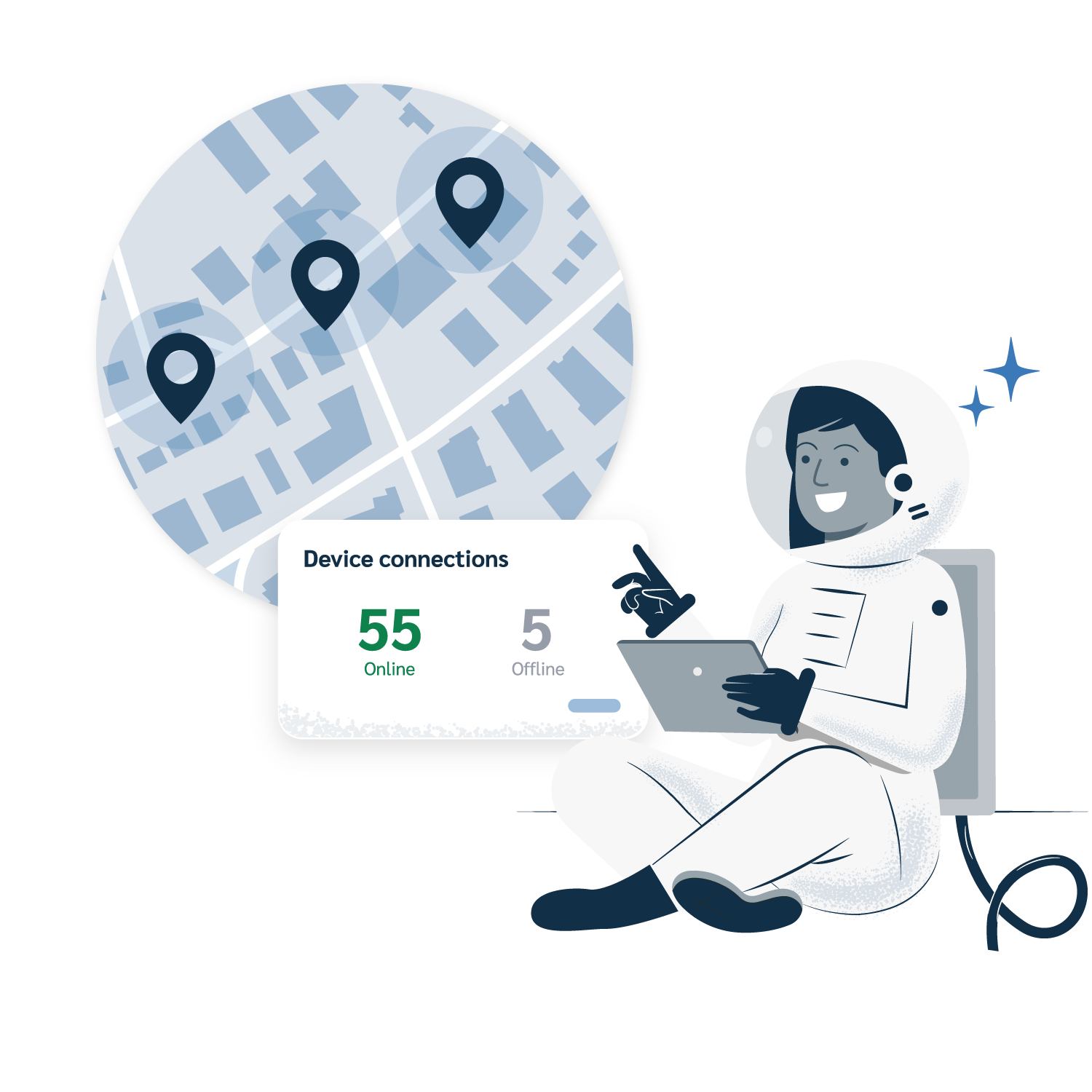
How to choose the best laptop tracking software for your business
Not all laptop tracking software is created equal, and finding the right solution for your business can feel like navigating a maze. Whether you're managing a small startup or a global enterprise, having a clear framework to evaluate your options can save time, money, and future headaches. Here's how to approach the decision-making process:
Step 1: Evaluate your business needs
Start by identifying what matters most to your organization:
- Fleet Size:
- For small startups: Focus on solutions that are simple to deploy and manage, even without a dedicated IT team.
- For large enterprises: Look for scalable platforms that can handle hundreds or thousands of devices seamlessly.
- Industry-Specific Requirements:
- Healthcare: Prioritize HIPAA-compliant software with strong encryption for patient data.
- Education: Seek solutions with multi-user management features to track shared devices across campuses.
- Remote Work: Ensure tools provide location flexibility and proactive alerts for distributed teams.
Step 2: Compare features
The right software should do more than just track devices—it should support your overall IT strategy. Look for:
- Security Features: Remote lock, wipe, and encryption capabilities.
- User-Friendly Dashboards: Easy access to device status and activity logs.
- Integration Options: Compatibility with existing systems like MDM platforms or IT asset management tools.
- Reporting & Evidence Collection: Tools for generating theft reports or legal documentation.
Pro tip: Compare your shortlist side by side before committing. The feature comparison table further down does exactly that across the main options.
Step 3: Consider budget and scalability
- Free vs. Paid Options:
- Built-in tools like Microsoft Find My Device or Apple Find My offer basic tracking at no extra cost, but they lack remote wipe, geofencing, and fleet management capabilities that businesses need.
- Look for software that offers a free trial, so you can test before committing.
- Scalability:
- Can the software grow with your business?
- Does it offer flexible licensing to accommodate new devices as you expand?
Step 4: Ask the right questions
When evaluating software, consider:
- How quickly can it be deployed across all devices?
- Does it offer 24/7 support in case of theft or technical issues?
- What level of customization is available to suit your IT policies?
Best laptop tracking software for business in 2026
We've evaluated the leading laptop tracking solutions based on GPS accuracy, security features, multi-OS support, fleet management capabilities, and pricing. Here's how they compare for business use.
Prey
Prey is a unified endpoint security platform that combines always-on device tracking with data protection, fleet management, and dark web breach monitoring — all from a single dashboard. It's built for IT teams that need to locate, lock, and wipe devices across Windows, macOS, Linux, Android, iOS, and Chromebook. Known for industry-leading reliability and tracking accuracy.
Key strengths:
- Always-on GPS + Wi-Fi triangulation + GeoIP — three location technologies working together for accurate, always-on tracking
- Location history — full audit trail of device movements, not just last-known position
- Geofencing with automations — trigger alerts or security actions when devices enter or leave defined zones
- Remote lock, wipe, and factory reset — including full Windows factory reset (rare among competitors)
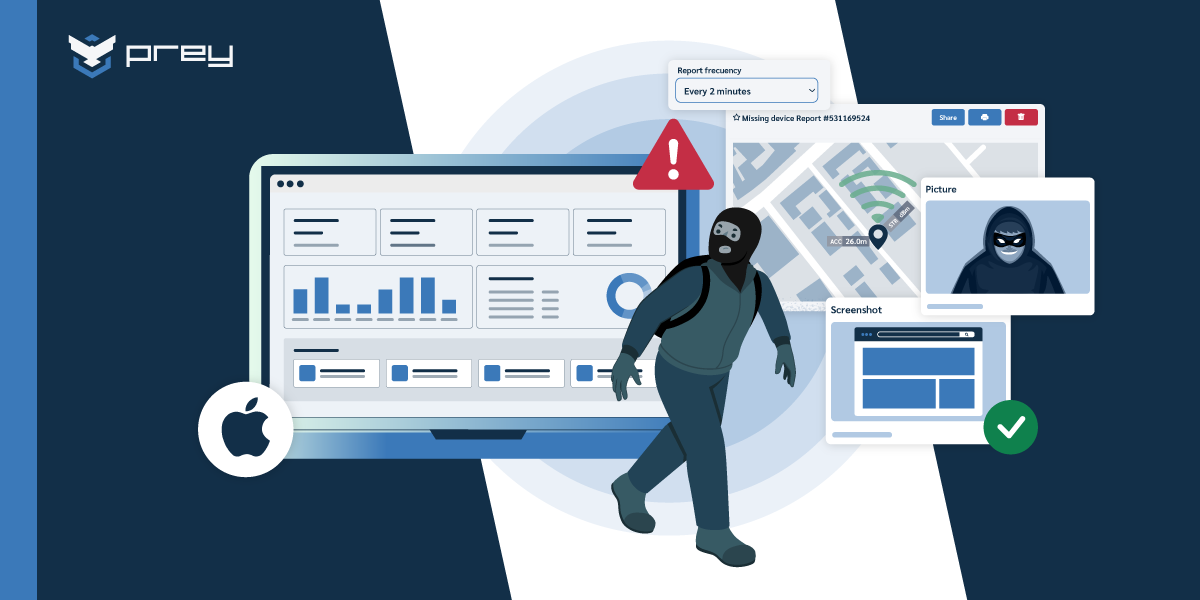
- Camera capture and screenshots — gather evidence for theft recovery
- Breach Monitoring — scans the dark web for leaked corporate credentials, a unique capability not offered by other tracking-focused tools
- MSP multi-tenant portal — manage multiple client accounts from one console
- Multi-OS support — Windows, macOS, Linux, Android, iOS, Chromebook
Pricing: $1.3-$2.25 per-device/month, paid plans. 14-day free trial available. See current pricing.
Best for: SMBs, education, healthcare, MSPs, and any organization managing distributed device fleets across multiple operating systems.
DriveStrike
DriveStrike is a focused endpoint protection solution.
Key strengths:
- Remote locate, lock, and wipe — core protection actions across Windows, macOS, iOS, Android, and Chromebook
- BitLocker and encryption management — enforce and verify disk encryption status
- Compliance documentation — HIPAA, GDPR, SOX audit support
- Simple deployment — lightweight agent, quick rollout
- Affordable pricing — starts at $2.00/device/month (volume discounts to $1.25)
Limitations:
- No GPS on macOS — only IP-based location (daily updates). Significant gap for Mac-heavy fleets
- No GPS on unsupervised iPhones — requires DEP/Supervised Mode for full tracking
- No geofencing
- No breach monitoring or dark web scanning
- No camera capture or evidence gathering tools
- No location history or movement audit trail
- No MSP multi-tenant portal
Pricing: $2.00/device/month.
Best for: Organizations that primarily need remote wipe and lock capabilities at a low price, with a Windows-heavy fleet.
Tether Security
Tether Security (formerly Exo5) is an enterprise-focused endpoint tracking and protection platform. It combines laptop tracking with RemoteKill encryption and lightweight MDM for mobile devices.
Key strengths:
- GPS + Wi-Fi + IP-geo tracking — multi-technology location
- RemoteKill — emergency full-disk encryption and OS lockout for stolen devices
- BitLocker/FileVault management — centralized encryption key database
- Geofencing and offline curfews — automatic security triggers based on location and connectivity
- Included MDM for iOS/Android — basic mobile management at no extra cost
Limitations:
- High minimum commitment: 25 seats at $29/seat/year ($725/year minimum)
- No camera capture or remote alarm
- No breach monitoring or dark web scanning
- No Linux support
- Very small team (~11 employees) — limited support bandwidth
- No visible customer case studies or social proof
Pricing: $29/seat/year (1-year), $19.96/seat/year (3-year). Minimum 25 seats.
Best for: Mid-size enterprises with a Windows/Mac fleet that need encryption management alongside tracking.
Microsoft Find My Device (built-in)
Microsoft's built-in tracking for Windows devices. It's free and already on every Windows 10/11 machine — but it's designed for consumers, not businesses.
Key strengths:
- Free and pre-installed — no deployment needed on Windows 10/11 devices
- Basic location tracking — last-known location via Microsoft account
- Remote lock — lock the device and display a message on screen
Limitations:
- Windows-only — no macOS, Linux, Android, iOS, or Chromebook support
- Requires a Microsoft account signed in — not ideal for shared or corporate-managed devices
- No remote wipe capability
- No geofencing, no location history, no fleet management
- No camera capture or evidence collection
- No alerts, automations, or compliance reporting
- No centralized dashboard for managing multiple devices
Pricing: Free (included with Windows).
Best for: Individual users or as a last-resort backup. Not a substitute for business laptop tracking software.
Feature comparison: best laptop tracking software at a glance
A few more computer tracking tips
When it comes to any kind of theft, time is of the essence. When a laptop is stolen, it is often powered down or in sleep/low-power mode. As soon as it is turned on, whether the thief is assessing general operability or analyzing an organization's data, the installed laptop tracking software will kick in, too. Soon, alerts will get sent via an established internet connection to the company software administrators and monitors, and the location services will start tracking the device.
However, these programs typically only work when the device is turned on, which means the best enterprise computer tracking software has battery-efficient tracking to find your device and acts quickly to disseminate information back to the company before the device is shut down again. A great laptop tracking system will not only allow you to monitor and reclaim a stolen laptop quickly, but also offer proof to the authorities that it was actually stolen in the first place.
Takeaways
No matter how small your network is, installing a laptop tracking system on your devices might be one of the best steps you can take when it comes to device and data security within your company. Everyone is a target, but not everyone needs to be a victim.
Having robust laptop tracking software on your organization's devices can take the burden off of your data security team and your employees in the case that an unplanned theft or loss of a device happens.
The best laptop tracking software for business should include:
- Always-on GPS with location history and geofencing
- Remote lock, wipe, and factory reset across all operating systems
- Evidence collection tools (camera capture, screenshots) for theft recovery
- Compliance documentation for HIPAA, GDPR, FERPA, and SOC 2 audits
- A centralized dashboard that doesn't require a dedicated analyst to operate
Prey includes these features and more. Whether you're protecting a 10-device startup or managing thousands of endpoints across multiple clients, Prey has a plan for your business.
Frequently asked questions
What is the best laptop tracking software for business?
There's no single winner; the right tool depends on your fleet. For mixed-OS fleets (Windows, macOS, Linux, Android, iOS, Chromebook), Prey covers the widest range with always-on tracking, remote wipe, and evidence capture at SMB pricing, and holds a 4.7/5 score in G2 reviews (2026). Absolute leads on firmware persistence for Windows-heavy, high-security fleets but costs more and skips Linux. Microsoft Find My Device is free but Windows-only, with no remote wipe or fleet management. Match the tool to the fleet, then compare by capability.
Is free laptop tracking software enough for a business?
Rarely. Native tools like Microsoft Find My Device are free but Windows-only, tied to a signed-in account, and stop the moment a thief signs out, with no remote wipe, no fleet view, and no evidence capture. They're a floor, not a solution. For more than a handful of devices, or any mixed-OS fleet, paid tracking software adds always-on location, remote lock and wipe, and centralized management that native tools don't offer.
What software can track and recover a stolen laptop?
Endpoint tracking-and-recovery software keeps a persistent agent on the device so you can locate, lock, wipe, and capture photo evidence after it's taken, unlike native tools that stop when the thief signs out. Prey, Absolute, and DriveStrike are the common business choices. Prey adds recovery evidence (camera and screenshots) and works across all major operating systems; Absolute adds firmware persistence that survives a wipe. No software agent survives a full OS reinstall, so speed to lock and wipe matters most.
Does laptop tracking software work on Mac and Linux?
It depends on the tool. Many are Windows-first: Microsoft Find My Device is Windows-only, and Absolute skips Linux entirely. If you run a mixed fleet, check OS coverage before anything else. Prey is one of the few that covers Windows, macOS, Linux, Android, iOS, and Chromebook from a single dashboard, which is why it's a common pick for organizations that aren't all-Windows.
How much does laptop tracking software cost?
Most business tools price per device, per year, and scale with fleet size. Native options like Microsoft Find My Device are free but limited to Windows with no fleet management. Paid platforms range widely: Prey is among the more affordable, with per-device plans and a 14-day free trial (no free tier); Absolute sits at the premium end. Because pricing shifts with volume and features, check current per-device rates before comparing totals.
Can laptop tracking software survive a factory reset?
Only firmware-level tools do. A factory reset wipes the operating system and every app installed on it, including software-based tracking agents like Prey, DriveStrike, or Tether. Absolute is the main exception: its agent lives in the device firmware and re-installs itself after a wipe, which is its core selling point and why it costs much more. For most teams, the practical defense is speed, since queued lock and wipe commands usually land before a thief reinstalls the OS.
Can it track a fleet of company laptops across multiple locations?
Yes, and it's the main reason to pay for business software instead of native tools. A fleet-grade platform shows every laptop across offices, home setups, and the road in one dashboard, with groups or tags to sort by location or department and mass actions to lock or wipe many devices at once. MDMs like Microsoft Intune and Jamf manage fleets too, but their location tracking is slow and periodic; native tools like Find My Device don't offer a fleet view at all. Prey gives always-on location for the whole fleet from a single dashboard, and MSPs manage several client fleets from one account. Before buying, check whether the tool caps device count and lets you act on many devices at once.
Does laptop tracking software also work as IT asset tracking?
Yes, for the operational half of it. A tracking agent reports each device's hardware specs, installed software, assigned user, and location history on every check-in, so the inventory builds itself from the fleet instead of from data entry. Prey pairs always-on location with HW/SW inventory, custom fields, and a loan manager, which covers what most IT teams actually consult during the week. The finance half is different: purchase orders, depreciation schedules, and license renewals are records no agent can read off a laptop, so they stay in an ITAM or procurement system. Platforms like Jamf and Microsoft Intune reach further into those lifecycle workflows. If your day-to-day need is location plus a live inventory, one tool covers it.
How do you track which employee has which laptop?
Assign the device to a user in your tracking platform and the record travels with the laptop. Each check-in confirms the device is still active under that assignment, and the history shows who held it before, so a reassignment between teams does not erase the trail. This is the part a spreadsheet loses first, because reassignments happen faster than anyone updates the file.
Can laptop tracking software replace an IT asset spreadsheet?
For the columns that describe the device and its holder, yes. Hardware specs, installed software, assigned user, location history, and loan status all populate from the device itself. Procurement records, depreciation schedules, and license renewals are finance-side data that no agent can read off a laptop, so those stay in your ITAM or finance system. Most teams end up with the spreadsheet retired and a much smaller set of records kept deliberately.
What happens to laptop tracking when an employee leaves?
The device keeps reporting after the person stops using it, which is exactly when you need it. During offboarding you can confirm the laptop is still online and where it last checked in, lock it if the return is delayed, and wipe it if it is not coming back. Unreturned hardware usually goes missing in the gap between someone's last day and the day IT notices, and a device that reports its own status closes that gap.
How do you run a laptop inventory audit without a manual count?
Pull the report instead of building it. Because each enrolled device reports its own specs, software, and last known location, the audit becomes a question of reviewing what came back rather than chasing people for confirmations. The devices that need attention are the ones that have not checked in, and that list is far shorter than the fleet.