
Key Takeaways
- IT budgeting allocates financial resources across technology needs to support business objectives and operational efficiency
- Effective IT budgets typically range from 3-8% of annual revenue, varying by industry and digital transformation maturity
- Strategic IT budgeting involves categorizing expenses into personnel, infrastructure, software, security, and emerging technologies
- Regular budget reviews and stakeholder involvement ensure alignment with evolving business priorities and technology trends
- Building contingency reserves of 5-10% helps manage unexpected IT expenses and technology emergencies
Understanding IT Budgeting Fundamentals
In today’s digital-first economy, budgeting for IT has evolved from a simple cost management exercise to a strategic imperative that drives business growth and competitive advantage. An it budget represents a comprehensive financial plan that allocates resources across all technology initiatives, from maintaining existing it infrastructure to investing in transformative digital capabilities.
Unlike traditional business budgets that focus primarily on operational costs, it budgets must balance immediate operational needs with long-term strategic investments. This complexity stems from technology’s dual role as both a business enabler and a cost center. The it budgeting process requires careful consideration of how each technology investment supports organizational goals while managing the inherent risks of rapid technological change.
Global it spending continues to surge, with organizations worldwide investing over $5.1 trillion in technology during 2024. This massive investment reflects technology’s critical role in driving innovation, improving operational efficiency, and creating new revenue streams. Companies that budget effectively for their it environment consistently outperform competitors in digital transformation initiatives and customer satisfaction metrics.
The connection between effective it budgeting and business success has never been clearer. Organizations with strategic it budgets allocate funds more efficiently, respond faster to market changes, and achieve better returns on their technology investments. They understand that budgeting for IT isn’t just about controlling costs—it’s about enabling business transformation.
Why Strategic IT Budgeting Matters in 2024
The landscape of technology spending has fundamentally shifted in recent years, making strategic it budgeting more critical than ever. Digital transformation initiatives now consume significant portions of technology budgets, with organizations investing heavily in cloud solutions, artificial intelligence, and automation technologies that promise to revolutionize business operations.
Cybersecurity threats have emerged as a primary driver of increased it spending, with security measures now representing 12-15% of total technology budgets in large enterprises. The rise of cyber threats means that effective it budgeting must prioritize security investments alongside traditional infrastructure and application spending. Organizations can no longer treat cybersecurity as an afterthought—it requires dedicated budget allocation and ongoing investment.
Cloud adoption has fundamentally altered how organizations approach technology spending, shifting traditional capital expenses to operating expenses. This transition requires new approaches to financial planning and budget management, as cloud costs can scale rapidly and unpredictably. IT teams must develop new skills in cloud cost optimization and implement robust monitoring systems to prevent budget overruns.
The global talent shortage in technology roles has significantly impacted personnel costs, forcing organizations to compete aggressively for skilled professionals. Strategic it budgeting now includes comprehensive workforce planning, training and development costs, and retention strategies that ensure access to critical technical expertise.
Organizations that fail to adopt strategic approaches to it budgeting face mounting challenges: technology debt, security vulnerabilities, operational inefficiencies, and inability to respond to market opportunities. Conversely, those that invest wisely in technology infrastructure gain competitive edge through improved agility, enhanced customer experiences, and operational excellence.
Essential Components of IT Budget Planning
Effective it budget planning requires comprehensive understanding of all technology-related expenses that support business operations. Modern it budgets encompass far more than traditional hardware and software costs, extending to cloud services, security investments, professional services, and emerging technology initiatives.
Personnel costs typically represent the largest component of most it budgets, often consuming 40-50% of total technology spending. These costs include salaries and benefits for internal it team members, contractor fees, and training and development costs for skill advancement. Organizations must carefully balance in-house expertise with external consultants and managed service providers to optimize both cost and capability.
Hardware expenses cover a broad spectrum of technology assets, from servers and networking equipment to end-user devices and specialized systems. Modern hardware budgeting extends beyond initial purchase prices to include ongoing maintenance costs, support contracts, and planned refresh cycles that prevent emergency replacements and security risks.
Software licensing and subscription costs have grown dramatically as organizations adopt software as a service solutions and cloud-based applications. These recurring expenses require careful management to prevent license sprawl and ensure optimal utilization. Software costs now include productivity suites, security tools, business applications, and development platforms.
Infrastructure investments encompass both traditional data center expenses and modern cloud services. Organizations must budget for data center operations, including power, cooling, and facilities management, while simultaneously planning for cloud migration and hybrid infrastructure models. Infrastructure costs represent a significant portion of capital expenses in many organizations.
Security spending has become a mandatory component of every it budget, covering cybersecurity tools, compliance requirements, and risk management initiatives. This includes firewalls, intrusion detection systems, security monitoring tools, and incident response capabilities. The increasing sophistication of cyber threats makes security investment non-negotiable.
Professional services costs include consulting, implementation support, and managed services from external providers. These expenses help organizations access specialized expertise, accelerate project delivery, and supplement internal capabilities. Effective budgeting balances internal resources with external expertise to achieve optimal outcomes.
Step-by-Step IT Budget Creation Process
Creating an effective it budget requires a systematic approach that aligns technology investments with business strategy. The budgeting process should begin 3-4 months before the fiscal year to allow adequate time for planning, stakeholder engagement, and approval workflows.
Assess Current IT Environment and Spending
The first step in effective it budgeting involves comprehensive assessment of existing technology assets, service contracts, and actual spending patterns. This assessment provides the foundation for informed decision-making and helps identify opportunities for cost optimization and resource reallocation.
A thorough audit of existing it infrastructure reveals underutilized resources, redundant systems, and assets approaching end-of-life. This inventory should catalog all hardware, software licenses, cloud subscriptions, and service contracts, including renewal dates and cost structures. Understanding current asset utilization helps organizations make informed decisions about future investments and potential cost savings.
Analysis of the previous year’s budget versus actual spending reveals important patterns and trends that inform future planning. This analysis should identify areas where spending exceeded projections, understand the causes of budget variances, and evaluate the effectiveness of cost control measures. Organizations often discover significant variations between planned and actual technology spending, particularly in areas like cloud services and emergency hardware replacements.
Contract review processes identify upcoming renewals, price increases, and opportunities for renegotiation. Many organizations discover significant potential savings through vendor consolidation, contract renegotiation, and elimination of unused services. This review should also assess vendor performance and relationship quality to inform future procurement decisions.
Define Business Objectives and IT Requirements
Successful it budgeting requires deep alignment between technology investments and business strategy. This alignment ensures that every dollar spent on technology contributes to organizational goals and measurable business outcomes.
Stakeholder engagement processes should involve key business leaders from all major departments to understand their technology needs, pain points, and growth plans. These conversations reveal both explicit technology requirements and implicit needs that may not be immediately obvious. Understanding departmental priorities helps IT teams prioritize investments and allocate resources effectively.
Business impact assessment helps organizations prioritize technology investments based on their potential to drive revenue, reduce costs, improve efficiency, or mitigate risks. Not all technology investments offer equal value, and effective budgeting requires difficult choices about which initiatives receive funding and which must wait for future budget cycles.
Regulatory compliance and security requirements often drive mandatory technology investments that cannot be deferred. These requirements should be identified early in the budgeting process to ensure adequate resources are allocated for compliance initiatives, security upgrades, and risk mitigation measures.
Forecast Technology Needs and Costs
Accurate forecasting of future technology needs and costs requires market research, vendor engagement, and scenario planning. Technology markets evolve rapidly, and effective budgeting must account for both current pricing and future trends.
Market research helps organizations understand technology pricing trends, evaluate alternative solutions, and benchmark their spending against industry standards. This research should include analysis of emerging technologies, vendor roadmaps, and competitive landscape changes that might affect future technology decisions.
Total cost of ownership calculations extend beyond initial purchase prices to include implementation costs, training expenses, ongoing support, and eventual replacement or upgrade costs. Many organizations underestimate these additional expenses, leading to budget overruns and unexpected financial pressure.
Scenario planning helps organizations prepare for different growth trajectories, market conditions, and technology adoption rates. This planning should consider best-case, worst-case, and most-likely scenarios to ensure budget flexibility and risk mitigation.
Allocate Resources and Set Priorities
Resource allocation represents the most challenging aspect of it budgeting, requiring difficult decisions about competing priorities and limited resources. Effective allocation balances immediate operational needs with strategic investments that drive long-term competitive advantage.
Priority categorization helps organizations distinguish between must-have requirements that ensure business continuity, should-have investments that improve efficiency or capability, and nice-to-have initiatives that offer potential value but can be deferred if necessary. This categorization ensures that critical systems receive adequate funding while allowing flexibility for strategic investments.
Timeline coordination ensures that major projects and infrastructure upgrades are scheduled appropriately throughout the budget period. This coordination prevents resource conflicts, manages vendor capacity, and ensures that implementation timelines align with business needs and available resources.
Contingency planning allocates reserve funds for unexpected opportunities, emergency replacements, and unforeseen business requirements. Most successful organizations reserve 5-10% of their it budget for these contingencies, recognizing that technology environments are inherently unpredictable.
IT Budget Categories and Allocation Strategies
Understanding how to categorize and allocate technology spending helps organizations optimize their it budgets and ensure balanced investment across all critical areas. Industry benchmarks provide useful guidance, but each organization must develop allocation strategies that reflect their unique business model, growth stage, and strategic priorities.
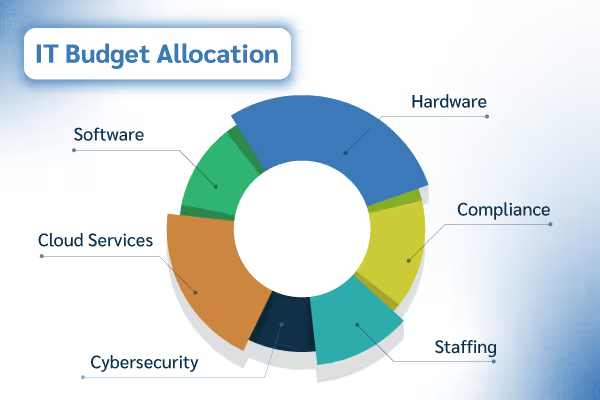
Typical it spending patterns vary significantly by industry, with technology companies allocating 8-11% of revenue to technology, while traditional manufacturing companies might spend only 3-4%. Financial services and healthcare organizations typically fall in the 4-7% range, reflecting their regulatory requirements and digital transformation initiatives.
Operational vs Strategic Technology Investments
The 70-30 rule provides a useful framework for balancing operational technology expenses with strategic innovation investments. This rule suggests allocating approximately 70% of the it budget to operational activities that maintain current systems and business operations, while reserving 30% for strategic initiatives that drive business growth and competitive advantage.
Operational costs include ongoing maintenance, support contracts, software licensing renewals, and personnel costs for day-to-day technology operations. These expenses ensure business continuity, maintain security standards, and support current business processes. While these costs may seem less exciting than new technology investments, they represent critical investments in organizational stability and reliability.
Strategic investments focus on new capabilities, digital transformation initiatives, and emerging technologies that create competitive advantage. These investments might include cloud migration projects, automation initiatives, data analytics platforms, or artificial intelligence implementations. Strategic investments typically require longer payback periods but offer greater potential for transformational business impact.
Methods for evaluating return on investment for strategic technology projects should consider both quantitative and qualitative benefits. Quantitative benefits might include cost savings, revenue increases, or efficiency improvements. Qualitative benefits could include improved customer satisfaction, enhanced employee productivity, or reduced business risk.
CapEx vs OpEx Considerations
The shift from capital expenditure models to operational expenditure models has fundamentally changed how organizations approach technology financial planning. Traditional CapEx models involved large upfront investments in hardware and software that were depreciated over several years. Modern OpEx models emphasize subscription services, cloud computing, and managed services that convert technology costs to ongoing operating expenses.
Cloud services have accelerated this transition, allowing organizations to access enterprise-grade technology capabilities without significant upfront investments. This shift offers greater flexibility and scalability but requires new approaches to cost management and budget planning. Organizations must develop capabilities to monitor and optimize ongoing cloud costs to prevent budget overruns.
Financial planning implications of this shift include changes in cash flow patterns, different depreciation schedules, and altered approaches to technology refresh cycles. OpEx models often provide better cash flow predictability but may result in higher long-term costs if not managed carefully.
Budget planning for OpEx-heavy technology environments requires more sophisticated forecasting and monitoring capabilities. Organizations must track usage patterns, optimize service levels, and negotiate favorable contract terms to control costs effectively.
Common IT Budgeting Challenges and Solutions
Even well-planned it budgets face numerous challenges that can derail financial plans and compromise technology objectives. Understanding these common challenges and implementing proven solutions helps organizations maintain budget discipline while achieving their technology goals.
Managing Unpredictable Technology Costs
Cloud costs represent one of the most significant sources of unpredictable technology expenses. Cloud services offer tremendous flexibility and scalability, but this same flexibility can lead to unexpected cost increases if not properly monitored and controlled. Organizations often experience “cloud sprawl” where multiple departments independently provision services without centralized oversight.
Cloud cost optimization strategies include implementing automated monitoring tools, establishing governance policies for service provisioning, and negotiating volume discounts with cloud providers. Regular cost reviews and optimization exercises help identify unused resources, right-size services, and eliminate unnecessary expenses.
Vendor price increases can significantly impact technology budgets, particularly for organizations with long-term contracts or limited vendor alternatives. Effective vendor management includes diversifying suppliers, negotiating price protection clauses, and developing alternative sourcing strategies to maintain negotiating leverage.
Emergency response planning helps organizations respond quickly to critical system failures without devastating their budgets. This planning includes maintaining emergency funds, establishing relationships with emergency service providers, and implementing robust backup and disaster recovery systems that minimize the impact of system failures.
Balancing Innovation with Cost Control
Organizations face constant pressure to invest in emerging technologies while maintaining fiscal discipline and controlling costs. This balance requires sophisticated approaches to technology investment that maximize value while minimizing risk.
Portfolio approaches to technology investment treat innovation investments like financial portfolios, balancing high-risk, high-reward projects with lower-risk initiatives that offer more predictable returns. This approach helps organizations pursue transformational technologies while maintaining overall portfolio stability.
Pilot program strategies allow organizations to test new technologies before committing to full-scale implementations. These programs typically require smaller initial investments and provide valuable learning opportunities that inform larger investment decisions. Successful pilots can demonstrate value and build organizational confidence in new technologies.
Value-based budgeting focuses on business outcomes rather than technology features, ensuring that innovation investments deliver measurable business value. This approach requires clear definition of success metrics and regular assessment of project progress against these metrics.
Innovation funds separate from operational IT budgets allow organizations to pursue emerging technologies without compromising core technology operations. These funds typically represent 5-10% of total technology spending and focus specifically on experimental or transformational initiatives.
Stakeholder Alignment and Communication
Achieving stakeholder alignment represents one of the most challenging aspects of it budgeting, particularly in organizations where technology decisions affect multiple business units with competing priorities and limited understanding of technology complexities.
Cross-functional budget committees bring together representatives from IT, finance, and major business units to collaboratively develop technology budgets and priorities. These committees ensure that technology investments align with business needs while maintaining financial discipline and realistic expectations.
Regular communication strategies maintain stakeholder engagement throughout the budget period, not just during annual planning cycles. This communication includes regular progress reports, budget variance explanations, and updates on technology project outcomes. Transparent communication builds trust and support for technology investments.
Change management processes help organizations adapt budgets to changing business requirements, market conditions, and technology opportunities. These processes should balance flexibility with fiscal discipline, allowing necessary adjustments while preventing budget inflation and scope creep.
Best Practices for IT Budget Optimization
Optimizing it budgets requires ongoing attention to cost management, vendor relationships, and technology lifecycle planning. Organizations that excel at budget optimization implement systematic approaches to these areas and continuously seek opportunities for improvement.
Vendor Management and Cost Control
Vendor consolidation strategies reduce administrative overhead while improving negotiating leverage with technology suppliers. Organizations often discover they can achieve better pricing and service levels by working with fewer vendors while building stronger strategic relationships.
Regular market benchmarking ensures that organizations pay competitive prices for technology products and services. This benchmarking should include periodic requests for proposals, market research, and cost comparisons with industry peers. Many organizations discover significant savings opportunities through regular market testing.
Strategic vendor relationships extend beyond simple cost minimization to include collaboration on innovation, technology roadmap alignment, and mutual value creation. These relationships can provide access to emerging technologies, preferred pricing, and enhanced support levels that deliver value beyond simple cost savings.
License optimization programs help organizations maximize the value of their software investments while minimizing licensing costs. These programs include regular license audits, usage monitoring, and optimization of license types and quantities based on actual usage patterns.
Technology Lifecycle Management
Planned refresh cycles for hardware prevent emergency replacements that often cost significantly more than planned upgrades. These cycles should consider both technical obsolescence and business requirements to optimize replacement timing and minimize disruption.
Software upgrade planning aligns technology updates with business needs and vendor roadmaps while managing the costs and risks associated with major system changes. This planning should consider compatibility requirements, training needs, and business impact of upgrade activities.
End-of-life planning helps organizations avoid security risks and escalating support costs associated with obsolete technology. This planning should identify systems approaching end-of-life well in advance and develop transition strategies that minimize business disruption.
Asset disposal strategies help organizations recover value from retired equipment while ensuring secure data destruction and environmental compliance. These strategies can generate modest revenue while reducing the total cost of technology lifecycle management.
Performance Monitoring and Budget Tracking
Monthly budget variance analysis provides early warning of potential budget problems and enables proactive cost management. This analysis should identify both positive and negative variances and understand the underlying causes to inform future budget decisions.
Key performance indicators for measuring it budget effectiveness might include cost per employee, technology spending as percentage of revenue, project delivery within budget, and business value delivered per technology dollar invested. These metrics help organizations assess budget performance and identify improvement opportunities.
Automated tracking tools and dashboards provide real-time visibility into technology spending and help identify emerging cost trends before they become budget problems. These tools should integrate with financial systems and provide role-based access to relevant stakeholders.
Quarterly budget reviews provide opportunities to assess progress, adjust priorities, and reallocate resources based on changing business conditions. These reviews should involve key stakeholders and focus on both financial performance and business value delivery.
Future-Proofing Your IT Budget
As technology continues to evolve at an unprecedented pace, organizations must develop budgeting approaches that anticipate future technology trends while maintaining flexibility to adapt to unexpected developments. Future-proofing it budgets requires investment in emerging technologies, evolving security requirements, and workforce development.
Emerging Technology Investment Planning
Artificial intelligence and machine learning investments require significant upfront costs for platform development, data preparation, and model training. Organizations should budget for both technology infrastructure and the specialized talent required to implement and maintain AI systems. These investments often require 2-3 year payback periods but can deliver substantial competitive advantages.
Edge computing infrastructure represents a growing budget category as organizations seek to process data closer to its source for improved performance and reduced latency. This infrastructure requires investment in distributed computing resources, networking equipment, and management systems that can operate in diverse environments.
Quantum computing preparation, while still early-stage for most organizations, requires modest investments in research, training, and pilot projects to ensure readiness for future quantum computing applications. Organizations in cryptography, optimization, and scientific computing should begin budget planning for eventual quantum adoption.
Sustainable IT initiatives respond to growing environmental and regulatory pressures while potentially reducing long-term operating costs. These initiatives include energy-efficient hardware, renewable energy sourcing, and carbon offset programs that align technology investments with environmental goals.
Cybersecurity Budget Evolution
Zero-trust security model implementation requires significant investment in identity management, network segmentation, and continuous monitoring capabilities. This model assumes that threats exist both outside and inside organizational networks, requiring comprehensive security controls and ongoing investment in security technologies.
Cyber insurance budget allocation has become increasingly important as organizations seek to transfer some cybersecurity risk to insurance providers. These policies require careful cost-benefit analysis and integration with broader risk management strategies.
Compliance automation tools help organizations manage growing regulatory requirements while controlling compliance costs. These tools can automate reporting, monitoring, and audit activities that traditionally required significant manual effort.
Security training and awareness programs require ongoing investment in employee education, simulated phishing exercises, and security culture development. These programs often deliver high returns on investment by reducing human-related security incidents.
Workforce Development and Skills Investment
IT talent retention strategies must address competitive compensation pressures while developing internal capabilities that reduce dependence on external contractors. These strategies include competitive compensation packages, professional development opportunities, and career advancement paths that encourage employee retention.
Upskilling and reskilling programs help existing employees develop capabilities in emerging technologies while reducing recruitment costs and maintaining institutional knowledge. These programs require investment in training resources, certification programs, and time for skill development.
Outsourcing versus in-house capability development decisions should consider both cost and strategic factors. Some capabilities may be better outsourced to specialized providers, while others represent core competencies that should be developed internally.
Remote work technology support has become a permanent budget category for most organizations, requiring investment in collaboration tools, security solutions, and support systems that enable effective distributed work environments.
Frequently Asked Questions
What percentage of revenue should companies allocate to IT budgets?
IT budget allocation varies significantly by industry and organizational maturity. Technology companies typically allocate 8-11% of revenue to it spending, while traditional industries like manufacturing might spend only 3-4%. Financial services and healthcare organizations usually fall in the 4-7% range. The key is aligning it spending with business strategy rather than strictly following industry averages.
How often should IT budgets be reviewed and adjusted during the fiscal year?
Most successful organizations conduct monthly variance analysis and quarterly comprehensive budget reviews. Monthly reviews help identify emerging trends and potential problems early, while quarterly reviews provide opportunities for more significant adjustments based on changing business conditions or technology opportunities. Emergency reviews may be necessary for major incidents or unexpected business changes.
What are the most common mistakes organizations make in IT budget planning?
Common mistakes include underestimating total cost of ownership, failing to plan for technology lifecycle management, inadequate contingency planning, and poor stakeholder alignment. Many organizations also make the mistake of treating it budgets as purely operational expenses rather than strategic investments that drive business value.
How can companies justify increased IT spending to executive leadership?
Successful justification requires connecting technology investments to clear business outcomes such as revenue growth, cost reduction, risk mitigation, or competitive advantage. Use specific metrics and benchmarks to demonstrate value, include total cost of ownership analysis, and present options that show the consequences of underinvestment in technology.
What contingency percentage should be built into IT budgets for unexpected expenses?
Most organizations should reserve 5-10% of their total it budget for contingencies, with higher percentages appropriate for organizations in rapidly changing industries or those with aging infrastructure. This contingency should cover emergency hardware replacements, unexpected software licensing needs, security incidents, and strategic opportunities that arise during the budget period.