
Key Takeaways
- Security controls are safeguards that protect information systems, data, and infrastructure from cyber threats by reducing risks to acceptable levels
- There are five main functional types: preventive controls (firewalls, encryption), detective controls (IDS, SIEM), corrective controls (backups, incident response), deterrent controls (warning signs), and compensating controls (alternative measures)
- Security controls are categorized into three implementation types: physical controls (locks, surveillance), technical controls (antivirus, access management), and administrative controls (policies, training)
- Popular frameworks like NIST Cybersecurity Framework, ISO 27001, and CIS Critical Security Controls provide structured approaches for implementing security controls
- Continuous testing and validation of security controls through methods like penetration testing and vulnerability assessments ensures they remain effective against evolving cyber threats
What Are Security Controls in Cybersecurity
Every organization today operates in an environment where cyber threats lurk around every digital corner. From sophisticated ransomware attacks to simple phishing emails, the security challenges facing businesses have never been more complex or consequential. This is where security controls become your organization’s digital armor, standing between your valuable assets and those who would exploit them.
Security controls are systematic safeguards, countermeasures, and protective mechanisms designed to reduce risks to information systems, data, and infrastructure to acceptable levels. Think of them as the locks on your doors, the cameras watching your premises, and the policies guiding your employees’ behavior—but for the digital world. These security measures work together to create multiple layers of protection that cyber criminals must penetrate before reaching your sensitive data.
At their core, security controls protect what security professionals call the CIA triad: confidentiality, integrity, and availability of information. Confidentiality ensures that sensitive data remains accessible only to authorized individuals. Integrity maintains the accuracy and completeness of information throughout its lifecycle. Availability guarantees that authorized users can access systems and data when they need them for legitimate business purposes.
The role of security controls extends far beyond preventing unauthorized access. They serve as the foundation for managing cybersecurity risks, supporting business continuity when incidents occur, and maintaining customer trust in an increasingly connected world. Whether it’s a simple firewall blocking malicious network traffic or sophisticated intrusion detection systems identifying suspicious behavior patterns, each security control contributes to your organization’s overall security posture.
Types of Security Controls by Function
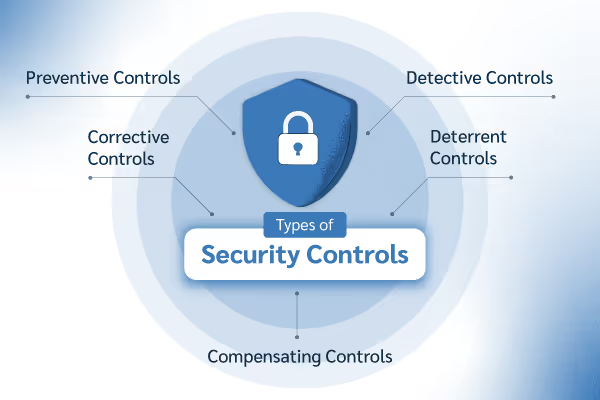
Understanding what security controls accomplish helps organizations build more effective defense strategies. Security professionals categorize controls based on their primary function within the security lifecycle, creating a framework that ensures comprehensive coverage against various cyber threats.
Preventive Controls
Preventive controls attempt to stop security incidents before they occur, serving as your organization’s first line of defense against cyber attacks. These security measures focus on blocking threats, eliminating vulnerabilities, and making systems more resistant to attack attempts.
- Firewalls represent one of the most fundamental preventive controls, acting as digital gatekeepers that control network traffic based on predetermined security rules. These systems examine every data packet attempting to enter or leave your network, blocking suspicious communications before they can cause damage.
- Identity and Access Management (IAM) systems serve as critical preventive controls by ensuring that only authorized individuals can access specific resources within your organization. These systems implement role-based access controls, enforce strong authentication requirements, and apply the principle of least privilege to minimize potential attack surfaces.
- Encryption technologies protect sensitive data by transforming it into unreadable formats that require specific cryptographic keys to decrypt. Whether protecting data stored on servers or information traveling across networks, data encryption ensures that even if attackers successfully bypass other security controls, they cannot easily access or misuse the protected information.
- Network segmentation divides larger networks into smaller, isolated segments, limiting an attacker’s ability to move laterally through your infrastructure after gaining initial access. This preventive control contains potential breaches within specific network zones, protecting critical systems from compromise even when other areas of the network are affected.
Detective Controls
Detective controls focus on identifying and alerting security teams to ongoing or completed security incidents, providing the visibility necessary to respond quickly and effectively to threats that bypass preventive measures.
- Intrusion Detection Systems (IDS) continuously monitor network traffic and system activities for signatures of known attacks or anomalous behavior patterns that might indicate security incidents. These systems analyze data packets, system logs, and user activities in real-time, generating alerts when suspicious activities are detected.
- Security Information and Event Management (SIEM) platforms serve as comprehensive detective controls by aggregating security event data from across your entire technology infrastructure. SIEM systems collect logs from firewalls, servers, applications, network devices, and security tools, applying analytical rules and machine learning algorithms to identify complex attack scenarios that might go unnoticed when examining individual systems in isolation.
- Log monitoring and analysis provide crucial visibility into system activities, user behaviors, and security events across your organization. Comprehensive logging captures detailed records of system access, configuration changes, data modifications, and security events, creating an audit trail that enables security teams to reconstruct incidents and identify attack vectors during investigations.
- Vulnerability scanners regularly assess your systems and applications for known security weaknesses, providing continuous visibility into potential attack vectors before they can be exploited. These detective controls identify missing patches, misconfigurations, and security gaps that require attention, enabling proactive remediation efforts.
- Network traffic analysis tools monitor data flows across your infrastructure, identifying unusual communication patterns, unauthorized data transfers, or suspicious network behaviors that might indicate security breaches or policy violations.
Corrective Controls
Corrective controls focus on mitigating damage and restoring systems to secure states after security incidents occur, acknowledging that despite best preventive and detective efforts, some incidents will succeed and require rapid response.
- Data backups represent fundamental corrective controls that enable organizations to restore normal operations after security incidents destroy, encrypt, or corrupt critical information. Regular, tested backups ensure that ransomware attacks, system failures, or accidental deletions don’t result in permanent data loss.
- Disaster recovery plans provide structured approaches for restoring critical systems and operations after major incidents disrupt business continuity. These plans document step-by-step procedures for system restoration, identify key personnel responsibilities, and establish recovery time objectives that align with business requirements.
- System patches and security updates represent crucial corrective controls that eliminate vulnerabilities after they’re discovered. Rapid patch deployment addresses newly disclosed security weaknesses before they can be widely exploited by cybercriminals. Automated patch management systems ensure that critical updates are deployed consistently across your technology infrastructure.
- Incident response procedures provide organized frameworks for containing security incidents, eradicating threats, and recovering affected systems while preserving evidence for potential legal proceedings. Effective incident response plans define roles and responsibilities, establish communication protocols, and specify technical procedures for various incident types.
- Malware removal tools and procedures eliminate malicious software from infected systems, restoring them to trusted states. Modern endpoint protection platforms can automatically quarantine detected threats while enabling security teams to analyze malware behavior and understand the scope of potential compromise.
Deterrent Controls
Deterrent controls discourage malicious activities and unauthorized behavior by making potential attackers aware that their actions will likely be detected and prosecuted. These psychological security measures influence behavior by increasing the perceived risks associated with security violations.
- Warning banners displayed during system login processes inform users that their activities are monitored and that unauthorized access attempts will be prosecuted to the full extent of the law.
- Surveillance cameras and other visible physical security measures create the perception of a monitored environment, discouraging both external attackers and malicious insiders from attempting unauthorized activities.
- Security awareness training programs serve as deterrent controls by educating employees about potential consequences of security policy violations, including termination and legal prosecution.
- Published security policies and acceptable use agreements establish clear behavioral expectations and consequences, deterring violations by ensuring that individuals understand prohibited activities and potential penalties.
Compensating Controls
Compensating controls provide alternative security measures when primary controls cannot be implemented due to technical limitations, operational requirements, or budget constraints. These alternative controls offer comparable security assurance through different mechanisms, ensuring that security objectives are met even when ideal solutions aren’t feasible.
For example, if a critical legacy application cannot support encryption, compensating controls might include enhanced network segmentation to isolate the application, additional access logging and monitoring, or strengthened physical security measures to protect the hosting systems.
Alternative authentication methods serve as compensating controls when standard multi-factor authentication cannot be implemented. This might include increased password complexity requirements, more frequent password changes, or additional verification procedures for sensitive operations.
Compensating controls must be carefully designed and documented to provide equivalent security assurance to the primary controls they replace.
Categories of Security Controls by Implementation
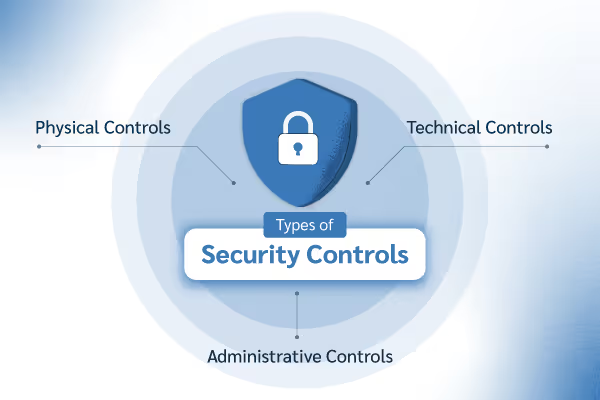
While functional classification helps understand what security controls accomplish, implementation categories describe how organizations deploy these protective measures. The three main implementation categories—physical, technical, and administrative—work together to create comprehensive security coverage.
Physical Controls
Physical controls protect hardware, facilities, and infrastructure through tangible barriers and environmental safeguards. Despite increasing focus on digital threats, physical security remains critically important because physical access to systems typically enables attackers to bypass many digital security controls.
- Biometric access systems verify physical access based on unique biological characteristics such as fingerprints, iris patterns, facial features, or palm vein patterns. These advanced access controls provide strong authentication for high-security areas because biometric characteristics are extremely difficult to forge or transfer between individuals.
- Security cameras and surveillance systems provide continuous monitoring of physical spaces, deterring unauthorized access attempts and providing evidence for investigating security incidents. Modern video surveillance incorporates artificial intelligence for automated threat detection, facial recognition, and behavioral analysis, transforming passive recording devices into active security monitoring platforms.
- Locked server rooms and data centers represent fundamental physical controls that restrict access to critical infrastructure. Environmental monitoring systems within these facilities track temperature, humidity, power consumption, and other factors that could affect system reliability. Fire suppression systems using water sprinklers or gas-based suppression protect sensitive equipment from fire damage.
- Endpoints pose a significant risk if lost or stolen. Organizations need to consider implementing MDM solutions to protect digital assets and ensure overall operational security. These tools allow organizations to enforce remote security policies on mobile devices such as smartphones, tablets, and laptops, regardless of their physical location
Technical Controls
Technical controls leverage technology to protect information systems and data from unauthorized access, use, disclosure, disruption, modification, or destruction.
- Next-Generation Firewalls (NGFW) represent evolved technical controls that combine traditional packet filtering with advanced features like application-level inspection, intrusion prevention, and integrated threat intelligence.
- Endpoint Detection and Response (EDR) systems provide comprehensive technical controls for protecting individual devices like workstations, servers, and mobile devices. EDR solutions continuously monitor endpoint activities, collect forensic data, and enable rapid response to security incidents. These systems represent the evolution of traditional antivirus software into comprehensive endpoint protection platforms that can detect and respond to advanced threats.
- Data Loss Prevention (DLP) systems monitor and control the movement of sensitive information across organizational boundaries, preventing unauthorized transmission of confidential data through email, web uploads, removable media, or other channels. DLP technologies identify sensitive data based on content inspection, contextual analysis, and policy definitions.
- Email security gateways protect against phishing attacks, malware distribution, and spam by filtering incoming and outgoing email communications. These technical controls use multiple detection techniques including reputation analysis, content scanning, and behavioral analysis to identify malicious messages before they reach user inboxes.
- Multi-factor authentication (MFA) systems require users to provide multiple forms of verification before granting access, typically combining something the user knows (password), something the user has (security token), and something the user is (biometric characteristic). MFA dramatically reduces the risk of unauthorized access even when passwords are compromised.
- Regular software updates and patches address newly discovered vulnerabilities, eliminating security weaknesses that could be exploited by attackers. Automated patch management systems ensure that critical updates are deployed consistently across the technology infrastructure while minimizing disruption to business operations.
Administrative Controls
Administrative controls establish the governance framework for organizational security through policies, procedures, and management practices. These controls address the human element of cybersecurity, defining how people interact with technology and security measures.
- Security policies serve as foundational administrative controls that establish mandatory requirements for information security throughout the organization. These policies define acceptable and unacceptable behaviors, specify security responsibilities for different roles, and provide the authority for implementing and enforcing security measures.
- Employee training programs represent critical administrative controls that address human vulnerabilities in organizational security. Security awareness training educates staff about cyber threats, social engineering tactics, phishing recognition, proper data handling procedures, and incident reporting protocols. Regular training helps create a security-conscious culture where employees understand their role as the first line of defense against cyber attacks.
- Access management procedures define how access rights are granted, reviewed, modified, and revoked throughout an employee’s lifecycle with the organization. These administrative controls specify approval processes for access requests, requirements for periodic access reviews, and procedures for promptly removing access when employees change roles or leave the organization.
- Risk assessments represent systematic administrative controls for identifying, analyzing, and prioritizing security risks. Regular risk assessments ensure that security controls remain appropriate as the threat landscape and organizational environment evolve. These assessments provide the foundation for making informed decisions about security investments and priorities.
- Incident response planning establishes structured approaches for handling security incidents when they occur. These administrative controls define roles and responsibilities, communication protocols, escalation procedures, and coordination mechanisms for managing incidents effectively while minimizing business impact.
- Business continuity planning ensures that essential business functions can continue during and after significant disruptions. These administrative controls identify critical processes, resources required to support them, and alternative arrangements when primary resources are unavailable.
How frameworks help you implement controls effectively
Implementing effective security controls requires structured approaches that ensure comprehensive coverage and alignment with industry best practices. Several established cybersecurity frameworks provide guidance for organizations seeking to build robust security programs.
NIST Cybersecurity Framework
The NIST Cybersecurity Framework provides a comprehensive approach to managing cybersecurity risks through five core functions: Identify, Protect, Detect, Respond, and Recover. This framework emphasizes continuous improvement and risk management integration with business objectives, making it particularly valuable for organizations seeking to align cybersecurity with enterprise risk management.
NIST SP 800-53 provides a detailed catalog of security controls specifically designed for federal agencies and organizations handling federal information. This comprehensive control set addresses various aspects of information security and privacy, providing detailed implementation guidance and assessment procedures.
ISO/IEC 27001
ISO/IEC 27001 establishes requirements for Information Security Management Systems (ISMS), providing a systematic approach to managing sensitive company information and ensuring its security. This international standard emphasizes risk-based approaches to implementing and continuously improving security controls through regular reviews and updates.
The standard requires organizations to establish, implement, maintain, and continually improve their ISMS based on risk assessments and business requirements. Organizations must identify security risks, implement appropriate controls to address identified risks, monitor control effectiveness, and make continuous improvements based on performance metrics and changing circumstances.
CIS Critical Security Controls
The Center for Internet Security (CIS) Critical Security Controls provides a prioritized set of 20 cybersecurity controls designed to help organizations improve their security posture against common attack vectors. These community-developed controls focus on practical, effective measures that provide the greatest risk reduction benefits.
The controls are organized into Implementation Groups (IG1, IG2, IG3) based on organizational size, resources, and risk tolerance. IG1 controls focus on basic cyber hygiene essential for all organizations, while IG2 and IG3 controls address more advanced threats and sophisticated attack techniques.
Industry-Specific Frameworks
Many industries have developed specialized security frameworks that address unique regulatory requirements and risk profiles specific to their sectors.
PCI-DSS (Payment Card Industry Data Security Standard) establishes security requirements for organizations that handle credit card information. The standard defines specific technical and operational requirements for protecting cardholder data, including network security, access controls, encryption, vulnerability management, and monitoring requirements.
The HIPAA (Health Insurance Portability and Accountability Act) establishes security and privacy requirements for healthcare organizations that handle protected health information. HIPAA security rules require covered entities to implement administrative, physical, and technical safeguards to protect electronic health information.
SOC 2 (Service Organization Control 2) provides frameworks for service organizations to demonstrate controls relevant to security, availability, processing integrity, confidentiality, and privacy. SOC 2 reports provide assurance to customers regarding the security practices and effectiveness of service provider controls.
The NIS 2 Directive establishes cybersecurity requirements for operators of critical infrastructure across the European Union. The directive requires organizations to implement risk management measures, incident reporting procedures, and supply chain security controls appropriate to their risk profiles.
FAQ
What is the difference between security controls and security measures?
Security controls and security measures are often used interchangeably, but security controls typically refer to specific, systematic safeguards implemented to protect information systems, while security measures is a broader term that can encompass any protective action or strategy.
How often should organizations assess their security controls for effectiveness?
Organizations should conduct formal security control assessments annually at minimum, but many security professionals recommend quarterly reviews for critical systems. Additionally, assessments should be triggered by significant changes such as new system deployments, major software updates, security incidents, or changes in the threat landscape. High-risk organizations or those in regulated industries may need more frequent assessments to meet compliance requirements.
What are compensating controls and when should they be used instead of primary controls?
Compensating controls are alternative security measures implemented when primary controls cannot be deployed due to technical limitations, operational requirements, or cost constraints. They should provide equivalent security protection through different methods. Use compensating controls when legacy systems cannot support modern security features, when business processes require exceptions to standard policies, or when primary control costs are prohibitive.
How do security controls help with regulatory compliance requirements like GDPR or SOX?
Security controls provide the technical and administrative safeguards required by regulatory frameworks. For GDPR compliance, controls like encryption, access management, data loss prevention, and incident response procedures protect personal data and demonstrate due diligence. SOX compliance requires controls over financial data integrity, including access controls, change management, and audit logging. Security control frameworks like ISO 27001 or NIST map directly to regulatory requirements, helping organizations implement comprehensive protection while meeting compliance obligations. Regular control testing and documentation also provide evidence of compliance during audits.
What is the most cost-effective way for small businesses to implement essential security controls?
Small businesses should start with CIS Critical Security Controls Implementation Group 1 (IG1), which provides basic cyber hygiene controls that address the most common threats. Priority controls include asset inventory, basic endpoint protection, email security, secure configurations, access management, and regular backups. Cloud-based security services often provide cost-effective solutions for small businesses, offering enterprise-grade protection without significant infrastructure investments. Many controls like security awareness training, password policies, and basic access management can be implemented with minimal cost but provide substantial security improvements. Focus on preventive controls first, then add detective and corrective controls as resources allow.